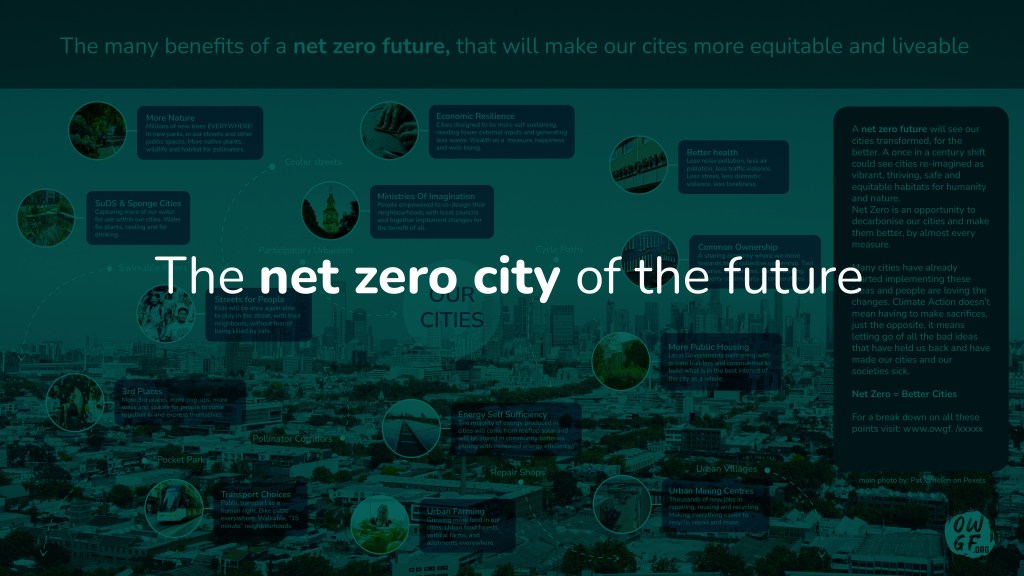
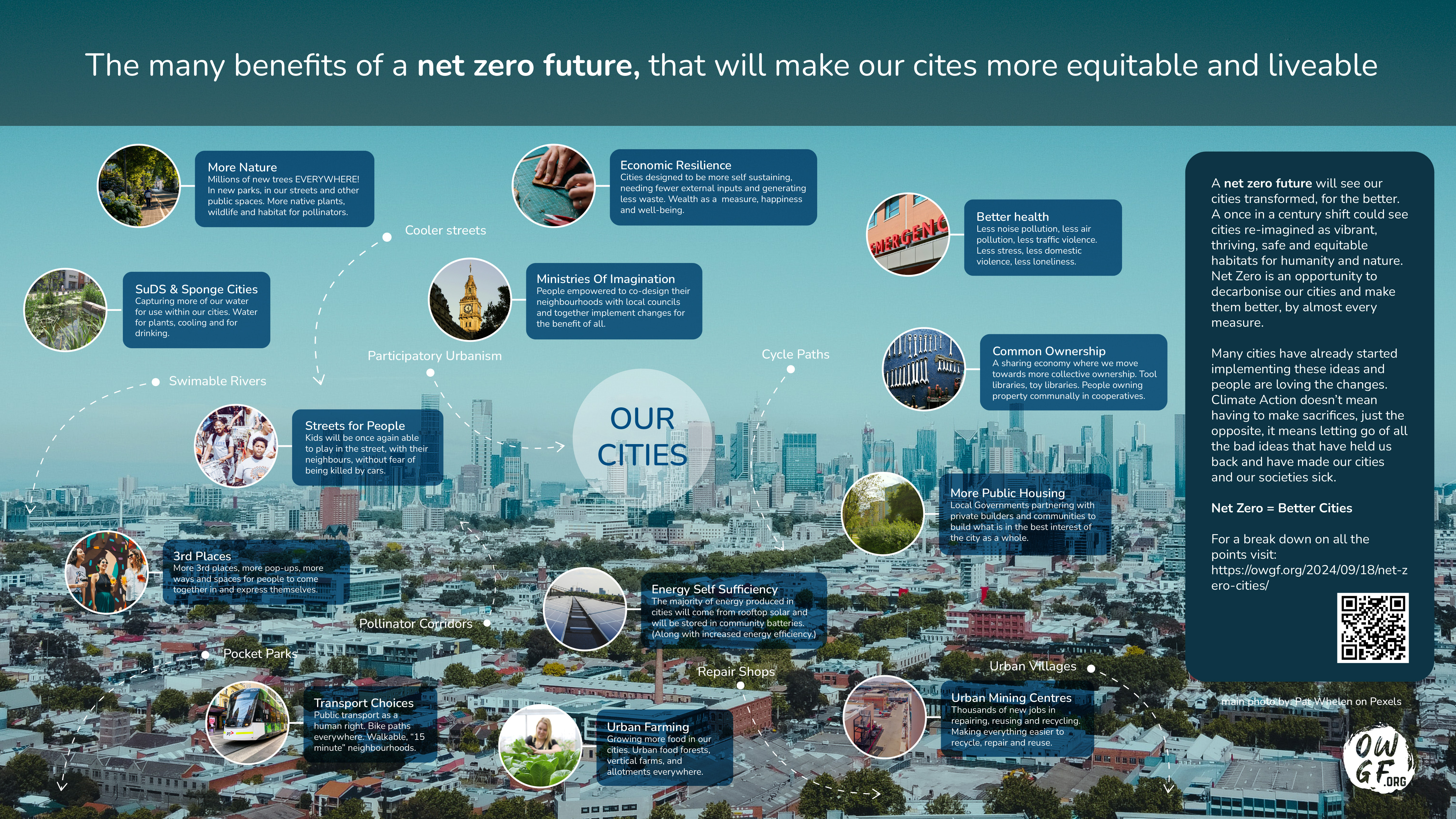
I created this infographic to highlight the positive transformations that can happen in our cities as we move towards Net Zero. Contrary to the fears some might have, Net Zero is not a grim scenario. Instead, it offers a chance to address the many issues currently affecting our cities with better solutions. As we face a climate-changed future, living sustainably and prioritising the environment will become essential. This means generating less waste, using less energy, and reimagining our economy and daily practices.
More Nature
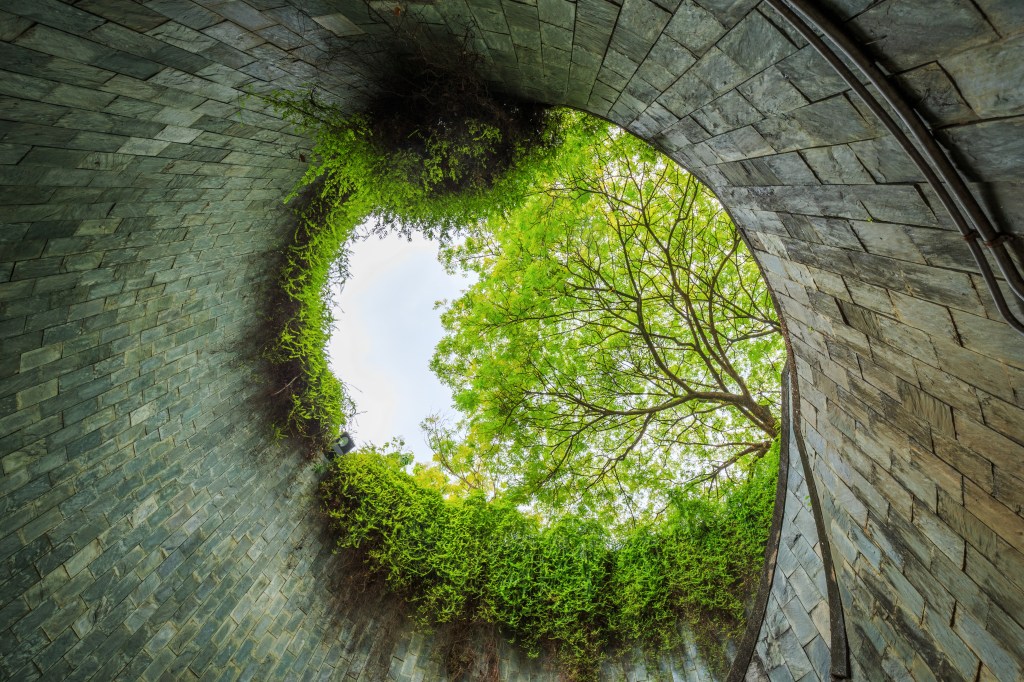
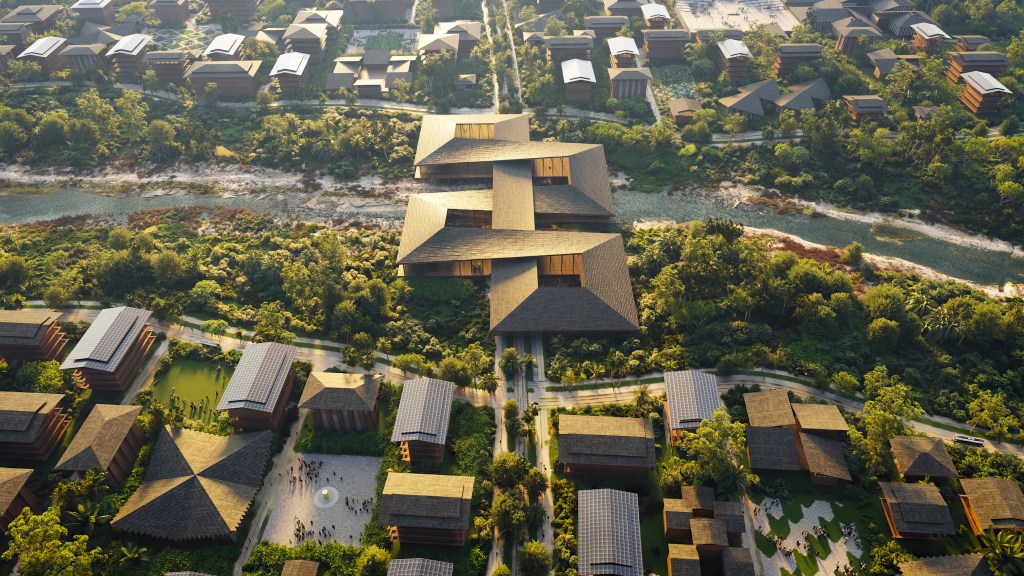
Our net Zero cities will be filled with greenery. Trees provide numerous benefits, so we will plant them everywhere. We will need to be creating pocket parks, food forests, nature-bathing spaces, wildlife habitats, and pollinator corridors. Our cities will become green havens, moving away from being dominated by concrete and industrial forms. GIMBYism – Greenery in my back yard, please
SuDS & Sponge Cities
In Net Zero Cities we will be a lot better at managing water. Building sustainable Urban Drainage Systems. (SuDS) Networks, of engineered vegetated areas and open spaces, (e.g; green roofs, rain gardens and porous pavements) designed to protect natural ecosystems and offer benefits to people and wildlife. We will be building Sponge Cities that emphasise flood management through green infrastructure. Sponge Cities alleviate urban flooding, water shortages, and heat island effects by incorporating more parks, gardens, green spaces, wetlands, nature strips, and permeable pavings.
Streets for People
In Net Zero Cities we will be reclaiming streets from polluting vehicles and making them safe for walking, cycling and for children to play in. We will be converting roads into multi-purpose spaces where everyone feels safe and welcome. Taking our streets back from being places to store cars and turning them into nature strips.
3rd Places
Net Zero Cities will see lots more spaces for people to gather and socialise. 3rd places where people can organise pop-up shops, music venues, or even dancing in the street. Third places that foster community interaction and provide a relaxed environment for people to gather outside of home and work.
Transport Choices
Net Zero Cities will see the end of Car Dependency. Residents will have multiple options for getting around. From walking to local amenities to using bikes and scooters for longer trips. Dedicated lanes for Micro Mobility will be ubiquitous. Public transport will be expanded to cover all parts of the city. Private vehicles will be slowed down on side streets, and car ownership discouraged in favour of car sharing.
Economic Resilience
Net Zero Cities will need to support locally owned businesses that sell locally made products and recycle any “waste.” Building an economy that measures collective happiness and well-being, not just wealth. Ensuring cities are as self sufficient as possible, while being connected to global and regional networks with zero emissions transport.
Ministries of Imagination
Empowering people to co-design their neighbourhoods with local councils and implement changes for everyone’s benefit. Creating “pacts”, similar to those in Bologna, where local residents can propose ideas for improving the local community and get funding and support for their ideas.
Should we follow bolognas model for participatory urbanism?
Energy Self-Sufficiency
In Net Zero cities we will be producing 85% of energy locally, with solar, and storing it in community batteries. With peer-to-peer energy trading and connected microgrids, communities will be able to share their energy with neighbours. Energy efficiency and using smart appliances to manage demand will make the whole system more resilient.
Urban Farming
In Net Zero Cities, urban food production will greatly expand. We’ll see more herbs and leafy greens growing in residential gardens and community spaces. Food forests with fruit and nut trees will transform unused areas into productive green spaces. Vertical farms will be supplying local stores with fresh produce. Also allotments near apartment buildings will enable residents to grow their own vegetables and herbs, fostering community and sustainability.
Better Health
Net Zero Cities will be considerably better for human health. We will see big reductions in air pollution, traffic noise, stress, traffic violence and loneliness. At the same time we will have more active lifestyles, more community connections and access to a lot more calming green spaces.
Common Ownership
In Net Zero Cities we will be embracing a sharing economy where people share tools, appliances, vehicles, toys, books, clothes and more. We will dramatically reduce the need for personal ownership of rarely used items by placing them into the public realm. When an item is no longer wanted it can go to a “library” for others to use.
More Public Housing
Net Zero Cities will ensure design and building decisions are based on community and environmental needs rather than profit. We will need a lot more public housing, cooperatives, and community land trusts, for better social outcomes. All buildings will be designed and built with end of life “Urban Mining” in mind and to the highest environmental standards.
Urban Mining Centres
“Waste” is only waste if we choose not to reuse it. Our cities contain valuable materials and commodities that can be repaired, reused, or recycled. Future cities will feature Urban Mining Centres where everything previously considered waste will be repaired, reused, or recycled. Our cities will be filled with 1000’s of companies like this Revival Projects employing 10,000’s of people.
And that’s it! My very top level Net Zero Cities features and benefits. If I have missed any super important points, or you have any other comments, please share them below or in the Fediverse. https://mastodon.world/@OWGF
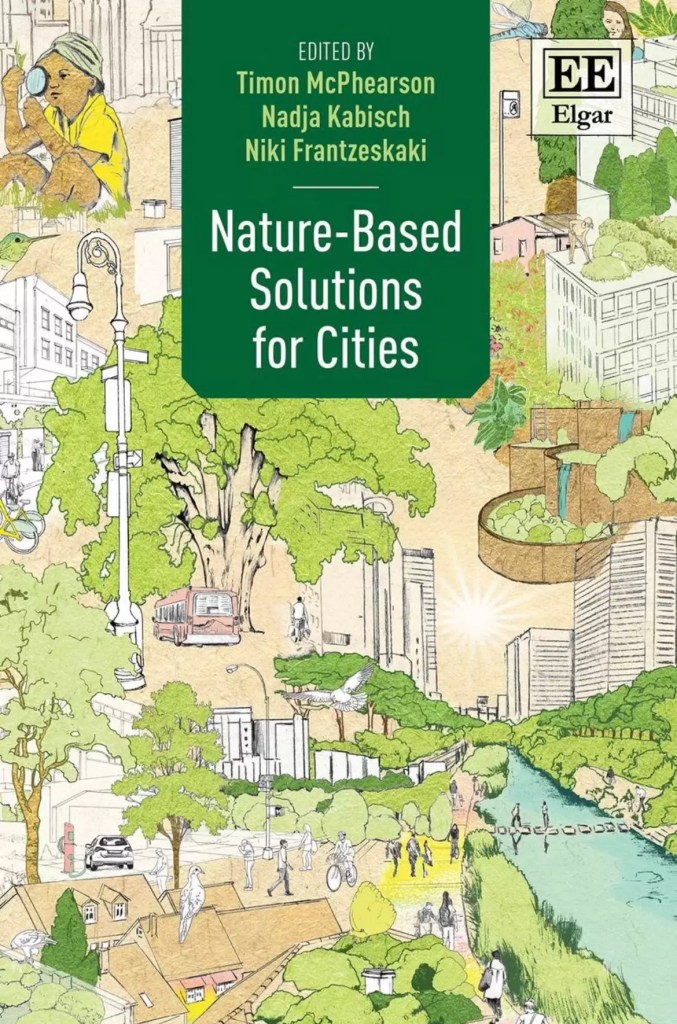
There is a whole lot more information on how we bring nature into our cities in this book, if you want to dive into the details: Nature-Based Solutions for Cities



 Our Wonderful Green Future
Leave a comment