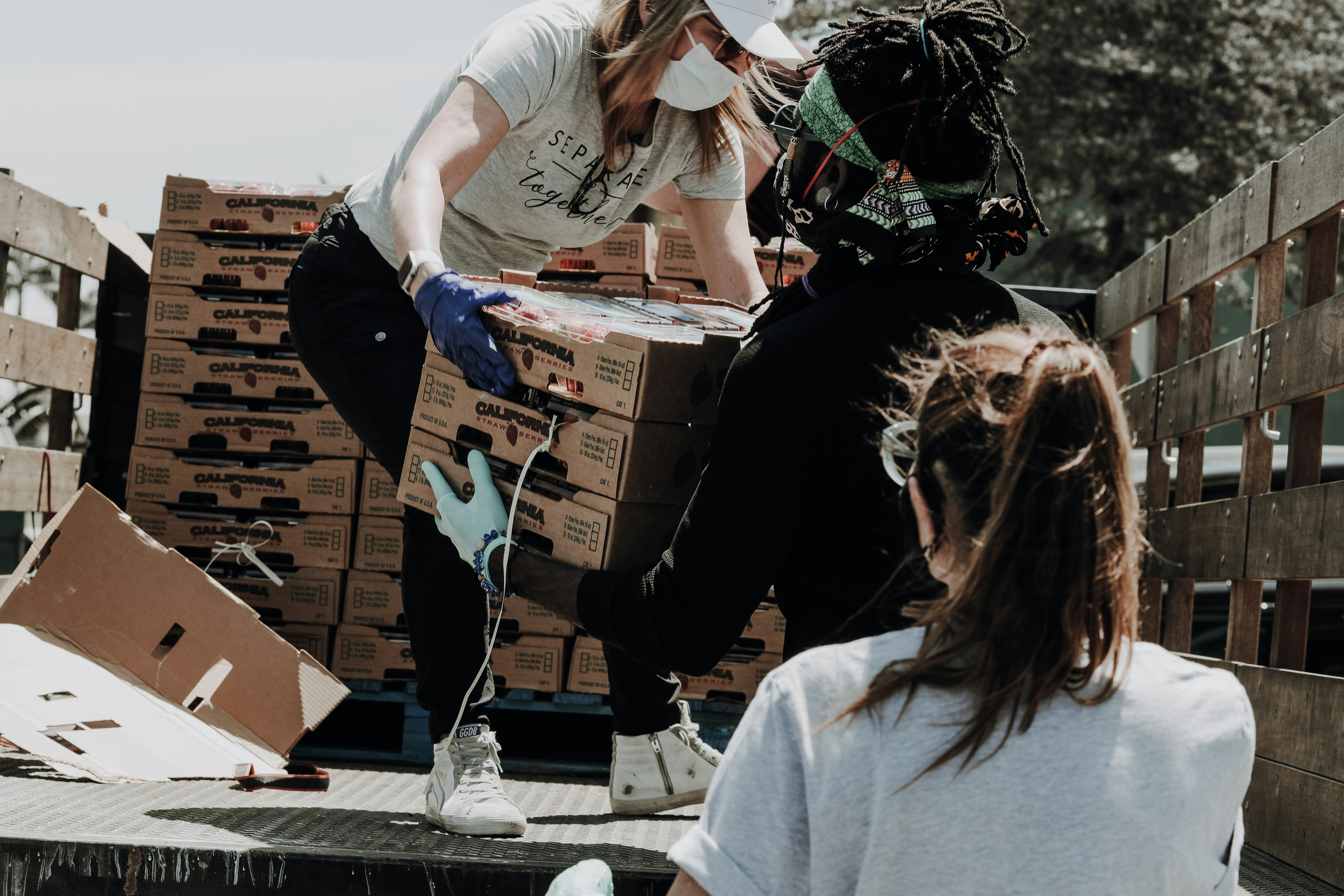
Volunteers unloading a truck

The Reason Many People Don’t Volunteer (It’s Not Time)

Last week I was sat in a room filled with a load of really passionate people who had come together to discuss creating a Community Newspaper. The ideas were flowing. The questions were flying about and the enthusiasm was there. But when it came to the crunch; “Hands up who wants to be part of the initial steering committee?” all that momentum came crashing to a halt. The hands did not come up.

It’s easy to think “Nobody has the time” and that’s the problem, but there is a bigger issue that holds people back. People don’t like to let other people down. Not wanting to let people down is perhaps a bigger barrier to getting people to volunteer than time.

This morning I got a very similar response talking to a gentleman about a regeneration project in my local park. He was initially reluctant to sign up because he just didn’t know if he could commit the time needed to the project. When I explained that he wasn’t obligated to come to every event and he could pick the ones that suited him, he was happy to sign up.

This is not a new observation to anyone working in this field. It’s called “commitment anxiety” or “anticipatory guilt.”: the fear that saying yes means taking responsibility for others’ expectations. When people worry about letting down their neighbours, friends, or community members who are counting on them, the social cost of failing outweighs the benefit of contributing.

Image via The Tampa Bay Estuary Program on Unsplash

On top of this there are a few other dimensions to this problem.

Social Risk vs. Practical Constraint: The “no time” explanation is socially safer. It’s concrete and feels less personal. Admitting fear of disappointing others would mean admitting vulnerability. So “time” becomes the convenient public reason while the real barrier sits beneath the surface.

Diffused Responsibility Paradox: Ironically, the stronger the group enthusiasm, the harder it can be for individuals to commit. When everyone seems passionate and capable, each person may think “someone else will take this lead.” The momentum of collective excitement can actually suppress individual action because nobody wants to stand out or fail publicly. This feels very much like what I experienced in the Community Newspaper meeting.

Perfectionism in Community Projects: Community initiatives carry emotional weight beyond transactional tasks. People worry they’ll damage relationships if the project struggles, not just that a deadline might be missed. That stakes-raising makes the ask more daunting than a typical volunteer opportunity.

So, is there anything we can learn from this? Are there any tips or tricks to get people to volunteer that sidestep these issues?

Small, time-bound trial commitments: EG “It’s just for 6 weeks, then we reassess” This lowers the perceived risk and gives people a really clear escape route, after 6 weeks. And then they can say “I don’t have time…” Instead of “join the steering committee,” try “come to one planning session next Thursday.” Each micro-commitment builds identity alignment and people start seeing themselves as someone who shows up. Once that self-image forms, larger commitments feel like a natural extension rather than a leap.

Making roles modular rather than monolithic: Let’s people contribute pieces without owning outcomes. Let’s people decide what they do, and when, so they feel like they are in control. Instead of giving people a task, ask them “What do you want to do?” and invite them to commit on their own terms. Also in an established organisation you can create a Shadowing Option so people can understand the scope before committing, offering a “shadow” role first.

Explicitly naming the fear: “I know saying yes feels daunting right now but…” This can reduce its power. Make it clear that quitting in 12 weeks is better than contributing nothing at all. Normalise exit on-ramps. Make leaving frictionless and guilt-free from the outset. Something like: “Anyone who joins the steering committee can step back at any point, no explanation needed.” When people know the door swings open both ways, commitment feels less like a trap. The irony is that making it easy to leave often makes people stay longer.

So that’s it. I wish I had all that in my head last week! For my Regen project simply getting people onto a mailing list is the big thing. Allowing people to passively sit in the background as potential volunteers until the day comes when they are in a position to volunteer pays off.


18 responses to “The Reason Many People Don’t Volunteer (It’s Not Time)”

  1. @owgf.org

    The people with busy lives, were the ones that were most willing to help out and most reliable. According to board member with lots of experience.

    She would always try to ask a working mum first to take up a role, rather than a stay at home mum.

  2. @owgf.org

    Yes, correct.

    I fear letting people down each time I have a migraine and can't be there for them. I am not very reliable.

    And there is the issue that people hate it when I wear an FFP2 mask to protect myself from Covid. I noticed the picture has masks, so maybe this is better outside the Netherlands.

    1. @ABScientist @owgf.org Thank you for raising the point about masks. It’s not a huge issue in my volunteer work because it’s mostly outdoors, but the social friction is real when everyone wants to go for lunch afterwards and I won’t go if it’s indoors.

  3. @owgf.org Yeah I definitely feel that. I'm reluctant to sign up for anything that even implies a commitment because I feel overwhelmed already

    same for donations, I prefer to give on my own schedule and I generally refuse if they only offer recurring

    1. Do you feel, “come along to this one event” and “sign up to this newsletter” is the least off-putting option? Also I am now thinking that insecurity of employment is playing a role in people’s reluctance?

      1. @owgf.org I volunteered to a core activist / campaign group for 4 years. As the topic, fracking Wales, was like a final rape of my environment. At the time, I was a recently separated a single parent, with split parenting. My income wasn’t sustainable. I also volunteered to other sustainability initiatives. I really wanted a brighter future for my children.

        It burnt me out. Activism,, volunteering often comes at a price, & trauma. I find it very hard to volunteer now.

  4. I just wish I could go back in time to my meeting last week armed with this knowledge 🙂

  5. @owgf.org I'm chronically ill and my capacities fluctuate. I'm constantly letting people down anyway so signing up for a new opportunity to let people down really feels not very useful 😕

    1. Health is a very overlooked determinant too. 👍

  6. @owgf.org

    "Making roles modular rather than monolithic: Let’s people contribute pieces without owning outcomes. Let’s people decide what they do, and when, so they feel like they are in control. Instead of giving people a task, ask them “What do you want to do?”" – If you think volunteers are just an interchangeable mass of people, then you're mistaken and you won't get people to volunteer for things. Everyone is different, will be volunteering for different reasons, and will want to do different tasks. Expecting them to do tasks that they have no interest in, aptitude for, or desire to do won't make them want to come back.

    1. Yes! 100% Which is exactly why you should ask people: “What do you want to do?”
      Because “Everyone is different, will be volunteering for different reasons, and will want to do different tasks.”
      👍

  7. @owgf.org these are excellent observations!

  8. @owgf.org Yes 100%, even just organising a weekly meetup in a pub is like that.

    One arrangement I've seen work is to have a small group of 3 or 4 for each role: this way they can share the load, share ideas and not feel bad if they need a break sometimes. It's also a good way to bring in new organisers: add them to an existing group and let them get involved at their own pace.

  9. @owgf.org with my direct action orgainzation, I ran my meetings with a “what did you do this week” theme. Everyone would be responsible to get only one thing done during a week. Then if the next week they didn’t have time for it, they wouldn’t be responsible for anything. I think it’s very useful to breaking through that barrier, to make everyone feel like they’re only volunteering a very tiny amount of their time

  10. @owgf.org with my direct action orgainzation, I ran my meetings with a “what did you do this week” theme. Everyone would be responsible to get only one thing done during a week. Then if the next week they didn’t have time for it, they wouldn’t be responsible for anything. I think it’s very useful to breaking through that barrier, to make everyone feel like they’re only volunteering a very small amount of accountability.
    This rules though, and it’s huge to have it put into words!!

  11. @owgf.org with my direct action orgainzation, I ran my meetings with a “what did you do this week” theme. Everyone would be responsible to get only one thing done during a week. Then if the next week they didn’t have time to do anything, they wouldn’t be responsible for anything. I think it’s very useful to breaking through that barrier, to make everyone feel like they’re only volunteering a very small amount of accountability.
    This rules though, and it’s huge to have it put into words!!

  12. We really need more volunteers

Leave a Reply

Our Wonderful Green Future
@owgf.org@owgf.org

The future will either be Green, or not at all.

67 posts
195 followers